Qué sucede cuando la programación se ejecuta sola: resultados observados de los clientes de Acuity Scheduling

Key takeaways
Time savings are widespread: 75% of surveyed customers spend less time on administrative work, freeing them up for what matters.
Revenue grows without working overtime: 70% increased revenue, 41% increased bookings, and 52% leveled up their client growth.
More reliable bookings lead to steadier days: 75% reduced no-shows and 56% say clients are more likely to follow and respect policies.
Polished booking builds confidence: 67% increased professionalism, 50% improved branding, and 30% gained confidence to raise rates.
Positive impact, on and off the clock: Customers feel more in control of their business (62%) and personal time (45%), and 54% feel less stressed.
Executive summary
Scheduling is one of the most overlooked operational costs for service businesses. While often treated as a necessary administrative task, manual scheduling creates friction that consumes time, increases stress, and limits growth.
Acuity Scheduling surveyed current customers to find out exactly what changes when you move from manual scheduling to an automated scheduling system that does the heavy lifting.
Across industries, 75% of Acuity businesses report spending less time on administrative tasks, and more than half say Acuity helped them fully automate their booking process. This reclaimed time translates directly into financial impact. 30% of businesses report annual savings between $500 and $5,000, and 70% say Acuity has contributed to their revenue growth, not by working longer hours, but by enabling new offers and better use of existing capacity. Many feel that Acuity has increased their professionalism and helped reinforce pricing decisions, with 30% reporting increased confidence to raise their rates.
Automated scheduling also plays a critical role in driving more reliable bookings. Over 40% of businesses report increased bookings, 75% report fewer no-shows, and 52% of businesses say Acuity's revenue tools have helped them grow their client base. Clear policies, automated reminders, and structured booking experiences have led to stronger client accountability, with 56% of businesses reporting that their clients are more likely to comply with their policies.
Importantly, the impact of scheduling automation is both operational and emotional. Over 60% of businesses report feeling more in control of their business, 54% report feeling less stressed, and 45% say they have greater control over their personal time as a result of using Acuity. The survey also highlights the emotional toll of inefficient systems, with 88% agreeing that manual back-and-forth scheduling is a source of stress and 80% acknowledging the emotional impact of no-shows.
Together, these findings tell a consistent story: scheduling software changes the trajectory of service businesses. It reduces administrative burden, unlocks revenue potential, prevents no-shows, strengthens brand perception, and gives business owners control over both their work and their time, however they choose to spend it.
This is what happens when scheduling runs itself.
Curious how scheduling software can support your business? Explore Acuity with a free trial.
How we collected the data
This report is based on survey responses collected from 500 Acuity Scheduling customers in 2025. Respondents represent appointment- and class-based businesses across multiple industries in the United States who sell services online. Survey questions assessed operational impact, revenue outcomes, booking reliability, brand perception, feature preference, and emotional well-being. Percentages reflect self-reported outcomes. All quotes have been kept anonymous.
Introduction: the cost of an outdated, manual scheduling process
For service businesses, scheduling is rarely just scheduling. It’s:
Emails back and forth to find a time
Navigating no-shows and last-minute cancellations
Distributing forms to collect important client details
Requesting deposits and chasing down payments
Upselling services to boost appointment value
The mental load of keeping calendars, policies, and people aligned
This all adds up, and it determines how much focus remains for the work that matters. When scheduling requires your constant attention and intervention, it pulls you away from opportunities for growth, creativity, and client care.
But when scheduling runs itself, businesses gain momentum.
Reclaiming the workday
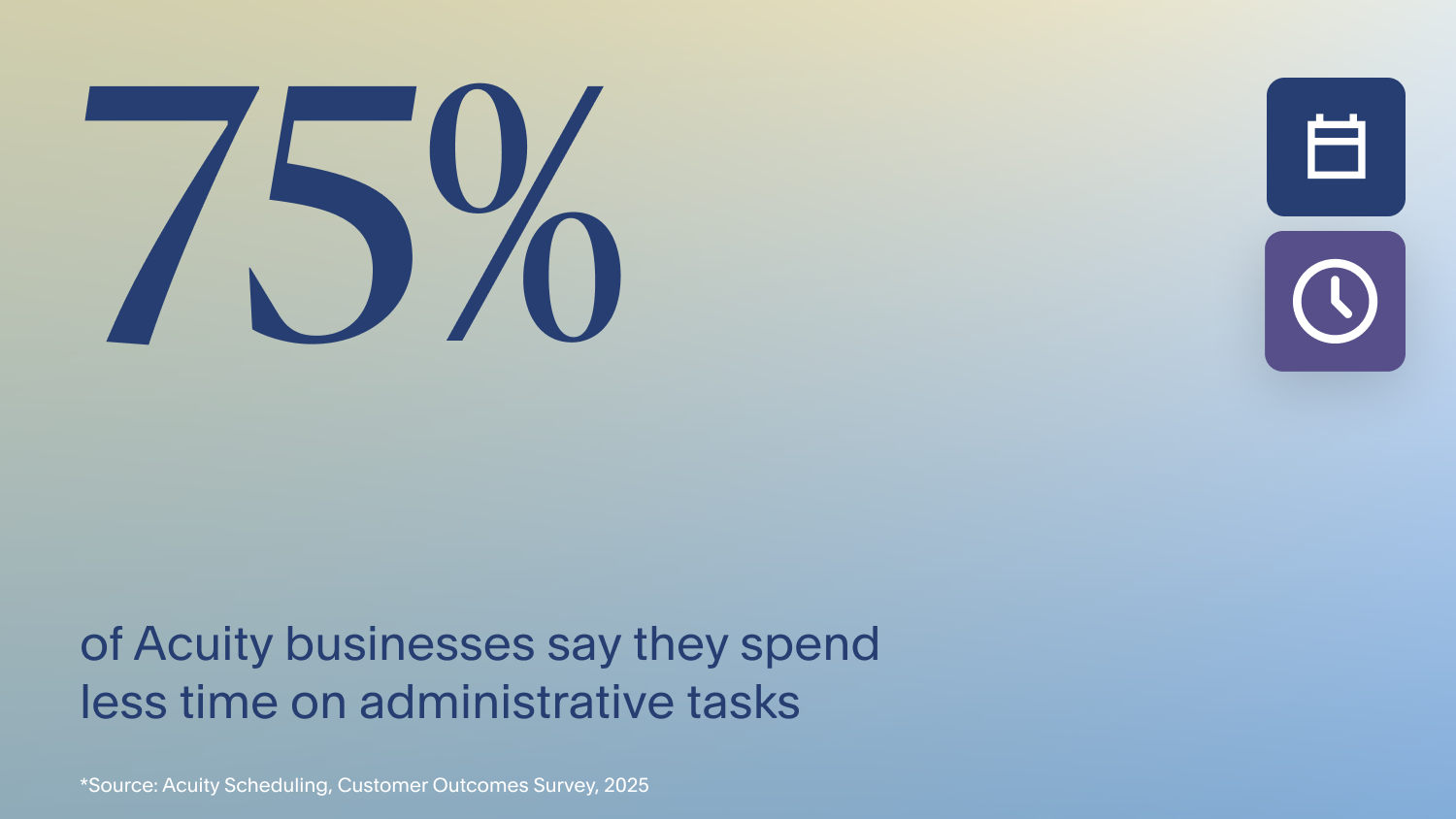
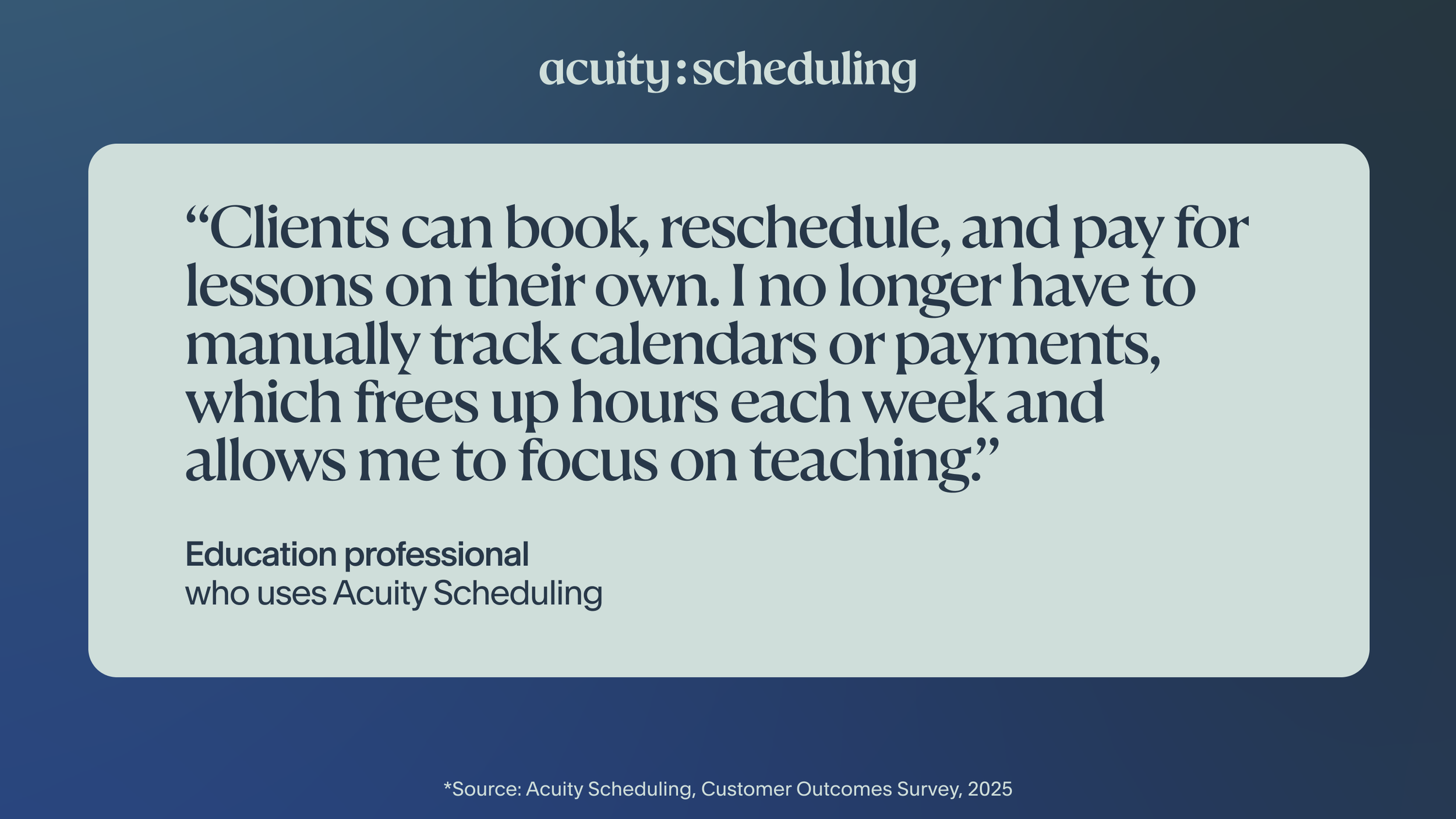
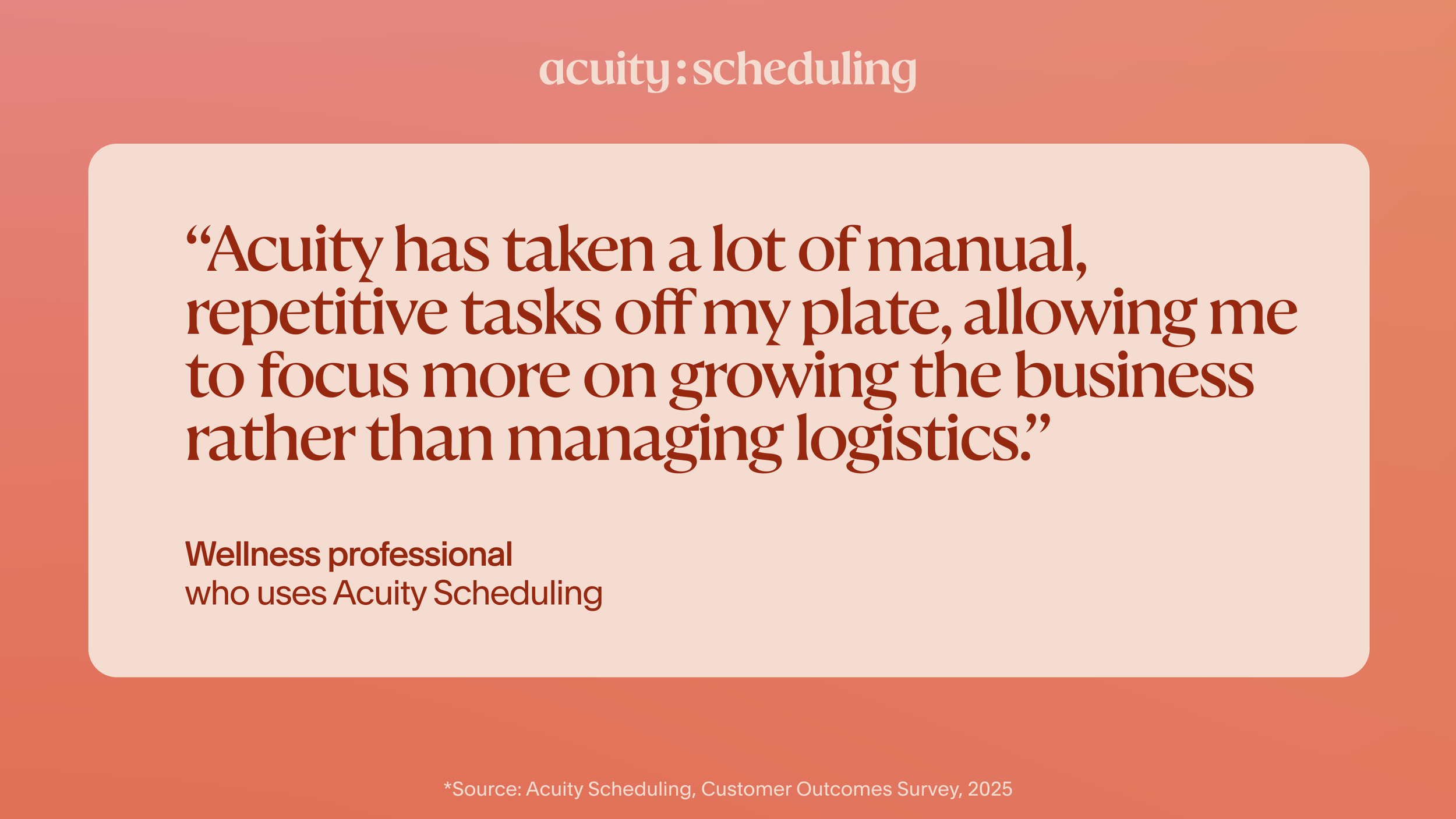
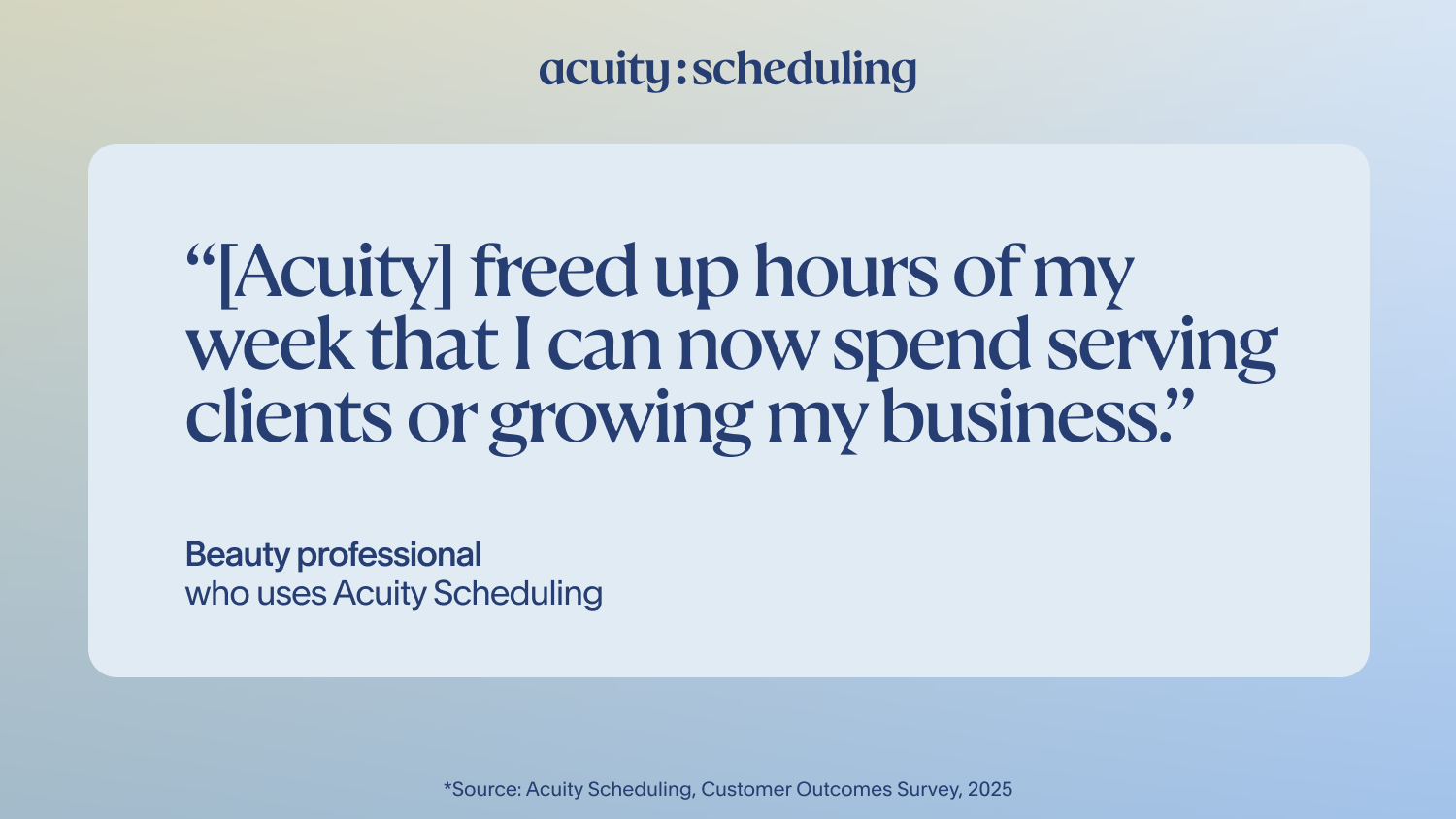
Automated scheduling gives service businesses more quality time. Acuity has helped more than half of surveyed customers completely automate their booking process, and 57% say they’ve reduced the time spent on administrative and scheduling-related tasks by half or more.
75% say Acuity has reduced administrative time overall as a result of automations, freeing up hours that were previously absorbed by inboxes, spreadsheets, and calendar juggling.
That time savings shows up differently depending on how a business operates. For some, it means fewer interruptions during the workday. For others, it means less hands-on effort required to manage capacity and registrations. In practice, scheduling becomes a background system that runs reliably without demanding constant attention.
When scheduling takes care of itself, it stops competing with the work that grows the business. It gives business owners more time to spend on clients, planning, and progress.
Saving money and earning more

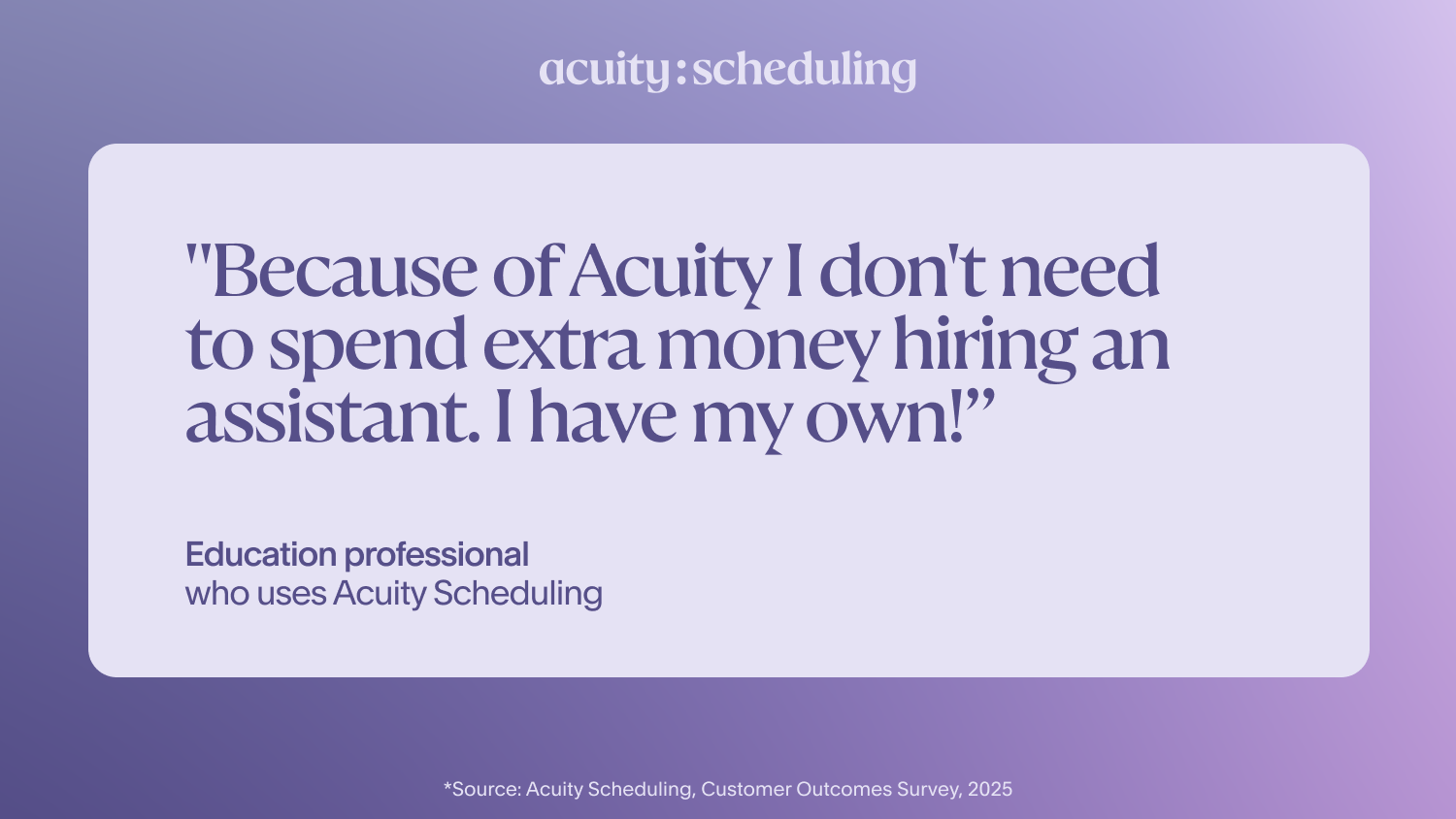
Businesses report that automated scheduling affects what they earn as much as how they work. When scheduling becomes more efficient, there’s a direct impact on revenue and spend.
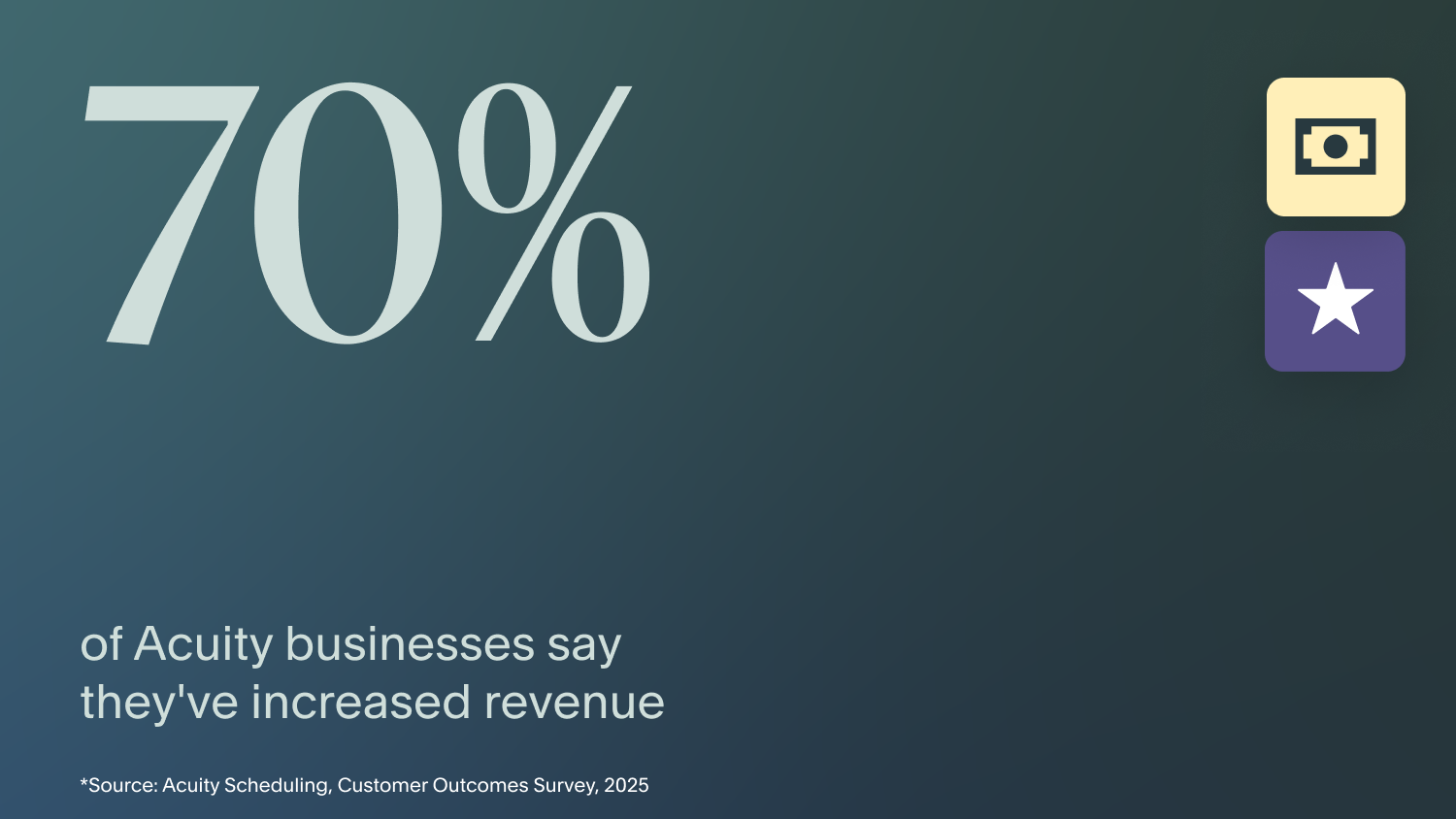
30% of customers surveyed say that Acuity saves their business between $500 and $5,000 annually, and 70% report that Acuity has helped them grow revenue. These businesses can accommodate more bookings, maintain fuller schedules, and operate more consistently without increasing administrative effort or extending their workdays.
For some, the impact goes even further. 30% of businesses report gaining confidence to raise prices after implementing Acuity’s automated scheduling. With a system in place to handle bookings, payments, and policies, pricing decisions feel supported and less risky.
Fewer no-shows, fuller calendars
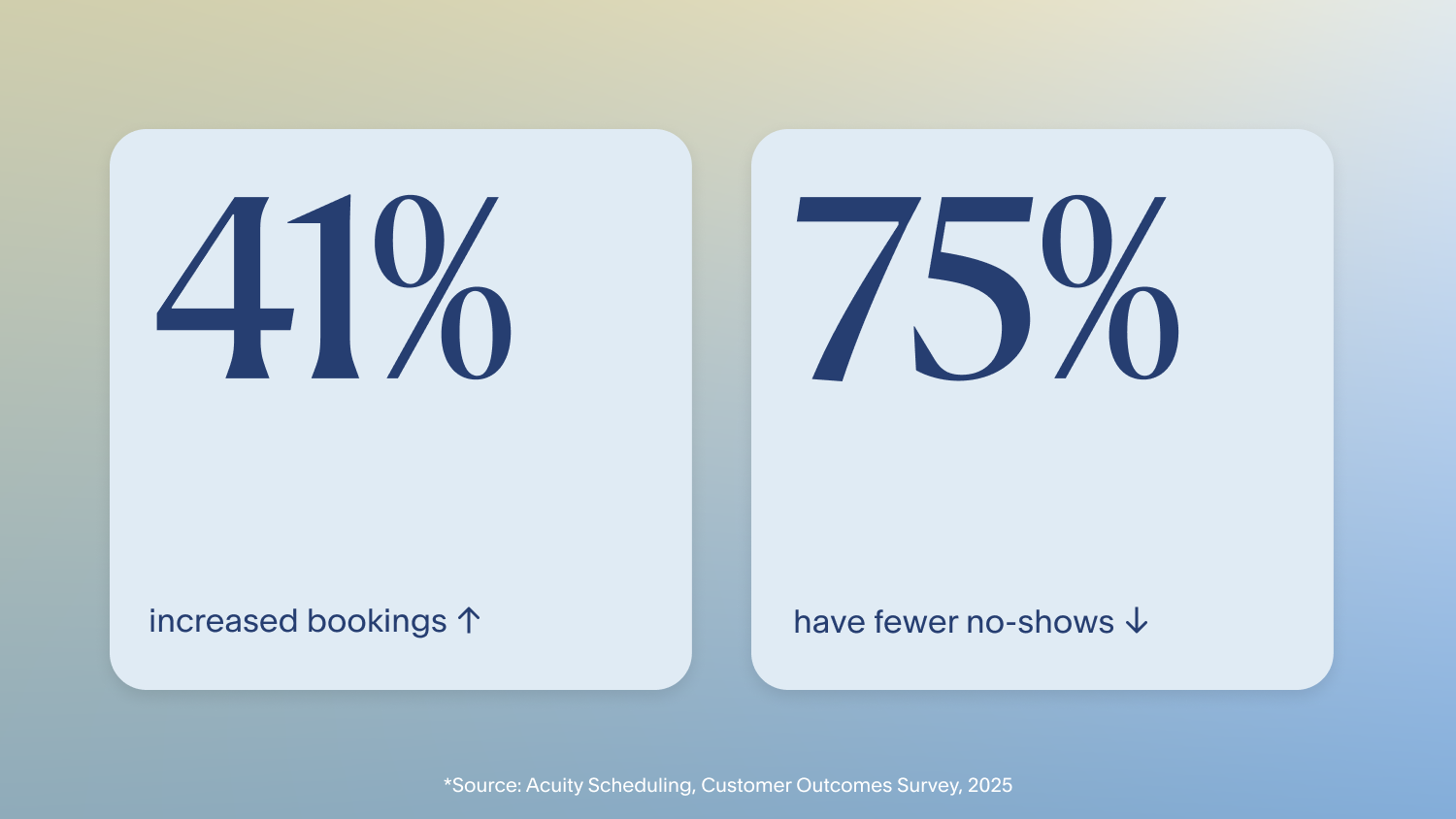
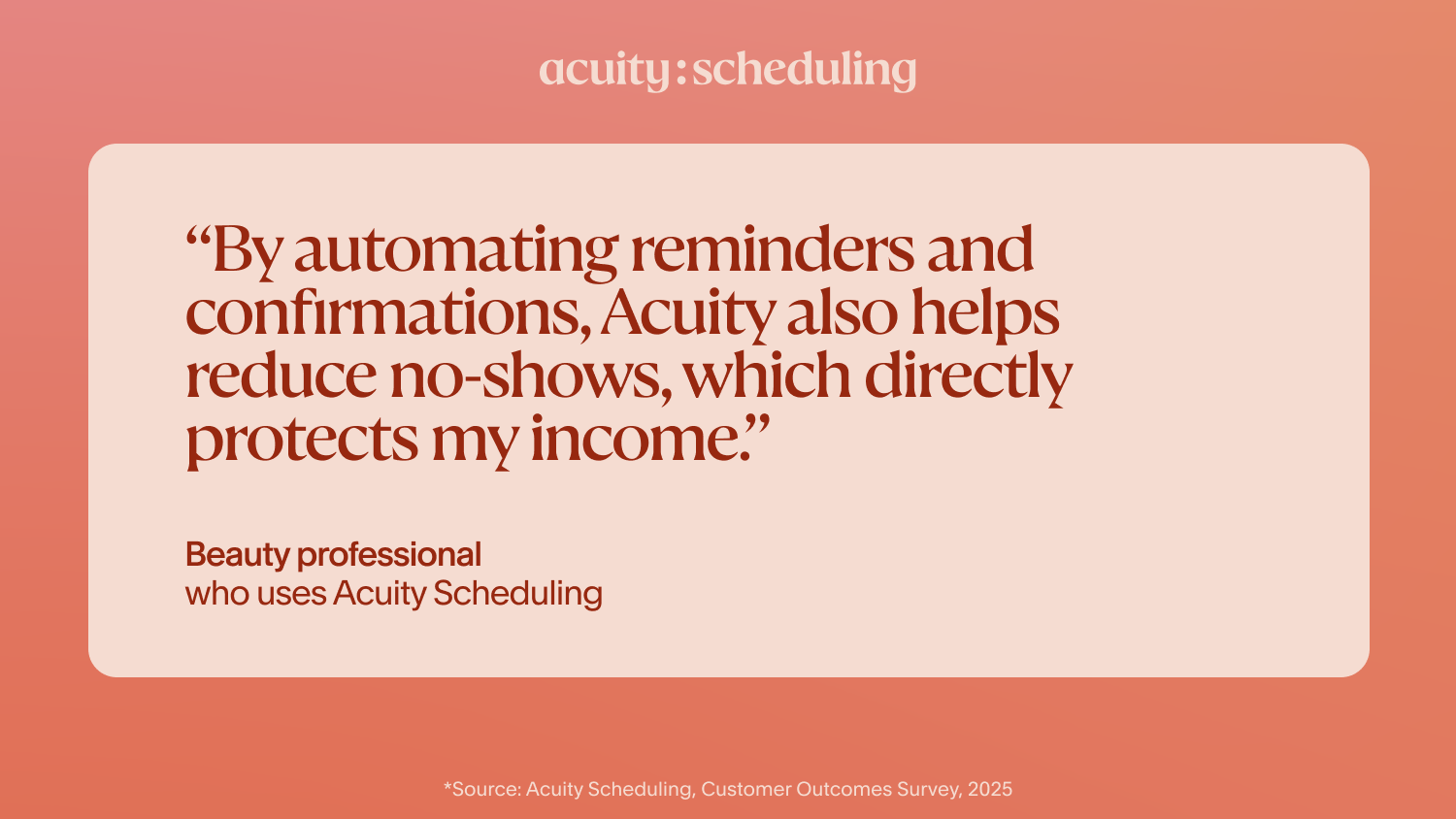
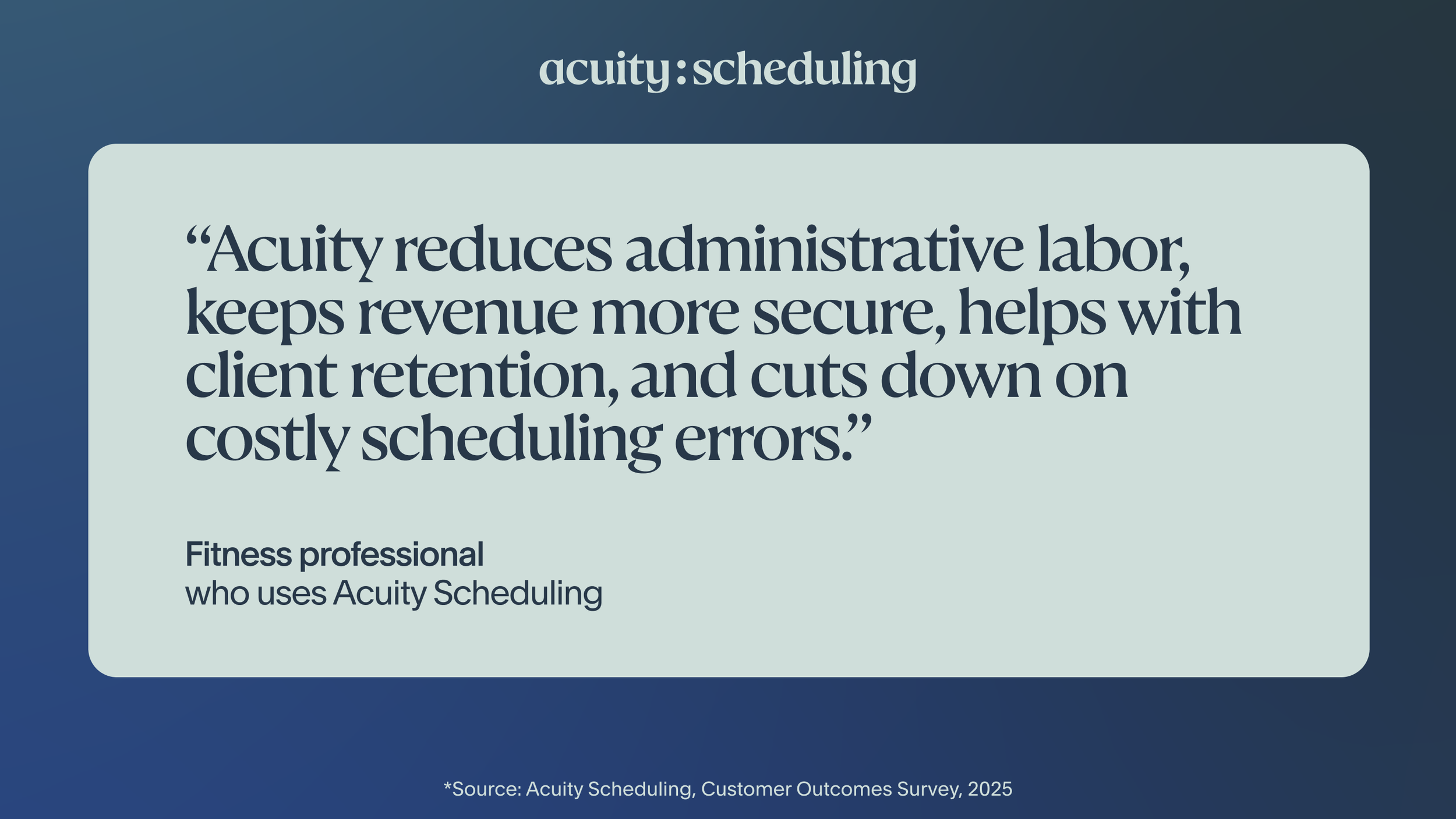
More bookings only help if they’re reliable. The data suggests that businesses see higher booking volume alongside more predictable calendars when scheduling runs automatically.
Over 40% of Acuity customers surveyed say they’ve increased bookings, while 75% have reduced no-shows with automated scheduling tools. Over 50% also report that Acuity’s revenue tools have helped them grow their client base, contributing to fuller calendars that are easier to manage day to day.
Much of this reliability comes from structure. Automated reminders, clear cancellation policies, and user-friendly booking flows set expectations before an appointment ever happens. Over 50% of businesses say clients are more likely to follow and respect policies when scheduling is handled through Acuity, reducing last-minute changes and missed appointments.
The result is fewer surprises and more control. Days run closer to plan, revenue feels steadier, and business owners spend less energy bracing for disruption.
Polished booking experiences build trust
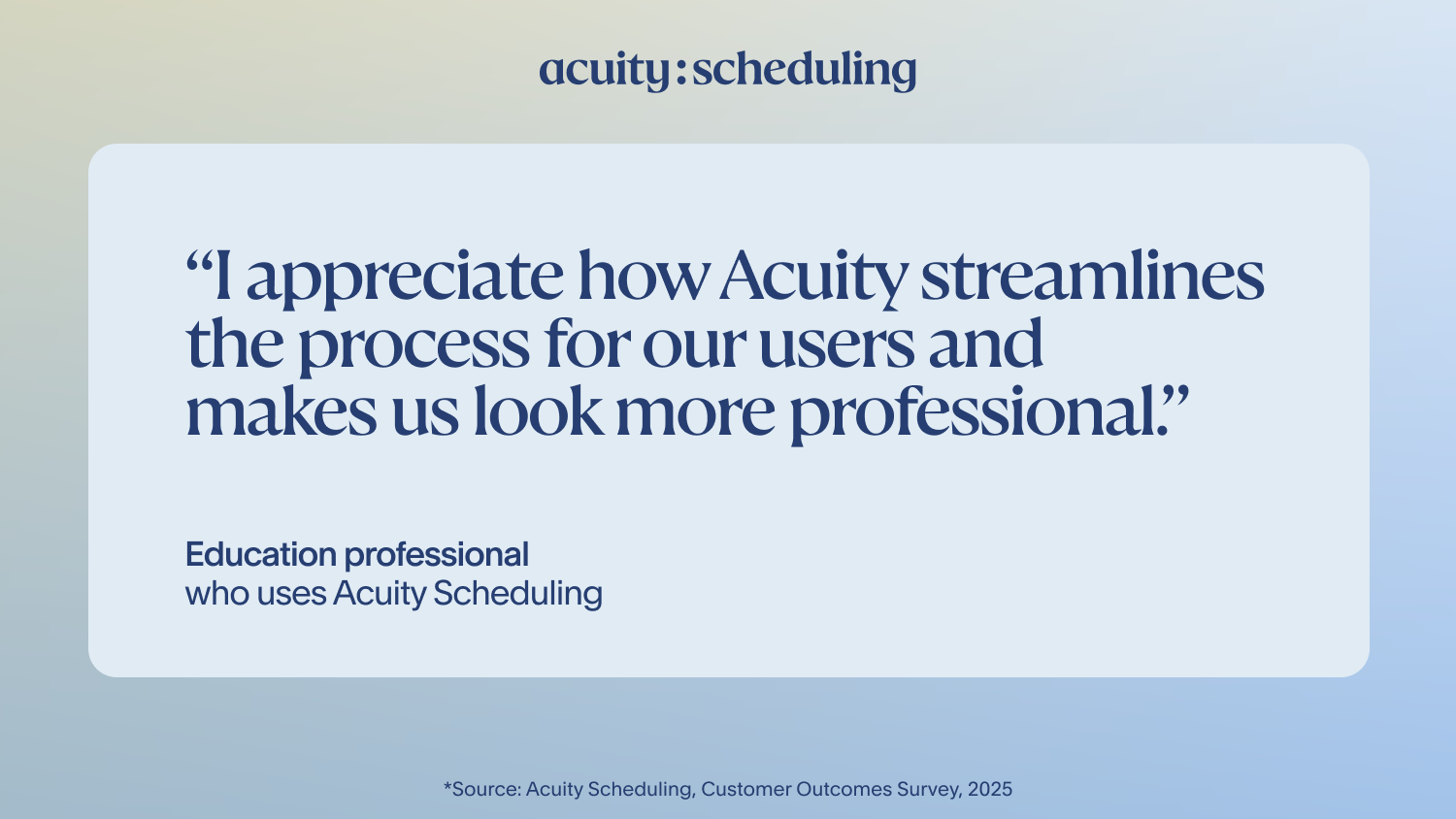
A professional booking experience shapes how clients perceive a business before any service is delivered.
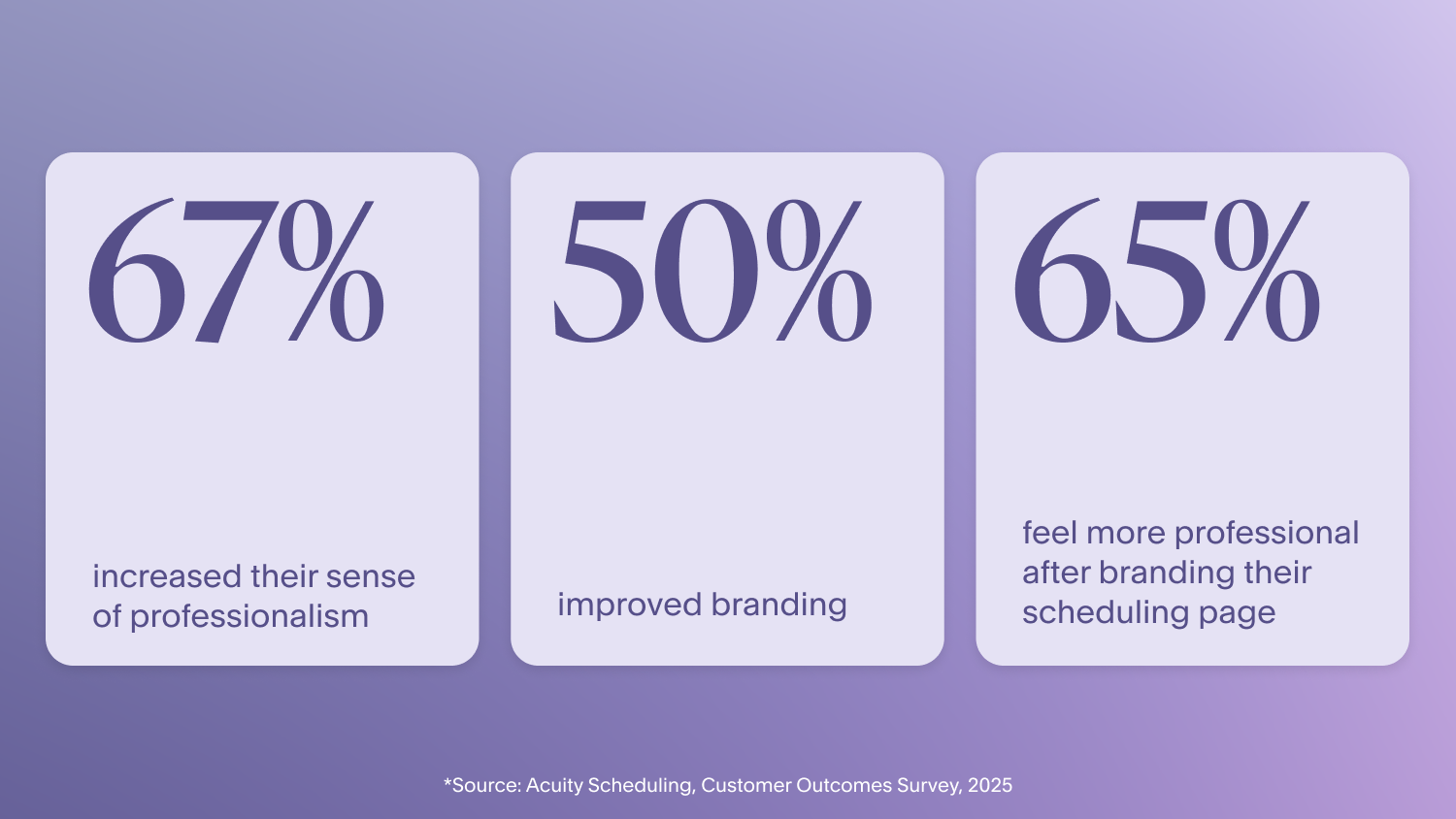
Acuity businesses consistently report that scheduling plays a meaningful role in how their business shows up. 67% of those surveyed say Acuity has helped increase professionalism, 50% improved branding, and 65% say their branded scheduling page makes them feel more professional.
That polish comes from clarity and brand consistency. Clear booking flows reduce friction, while customization tools help businesses shape the experience to match their brand. Colors, language, and layout work together to create a cohesive online presence. Clients instantly know what to expect, how to book, and what the rules are.
For many businesses, this combination reinforces trust. Pricing feels easier to stand behind, policies feel more natural to uphold, and client relationships start from a place of mutual respect rather than negotiation.
Lighter days, mentally speaking
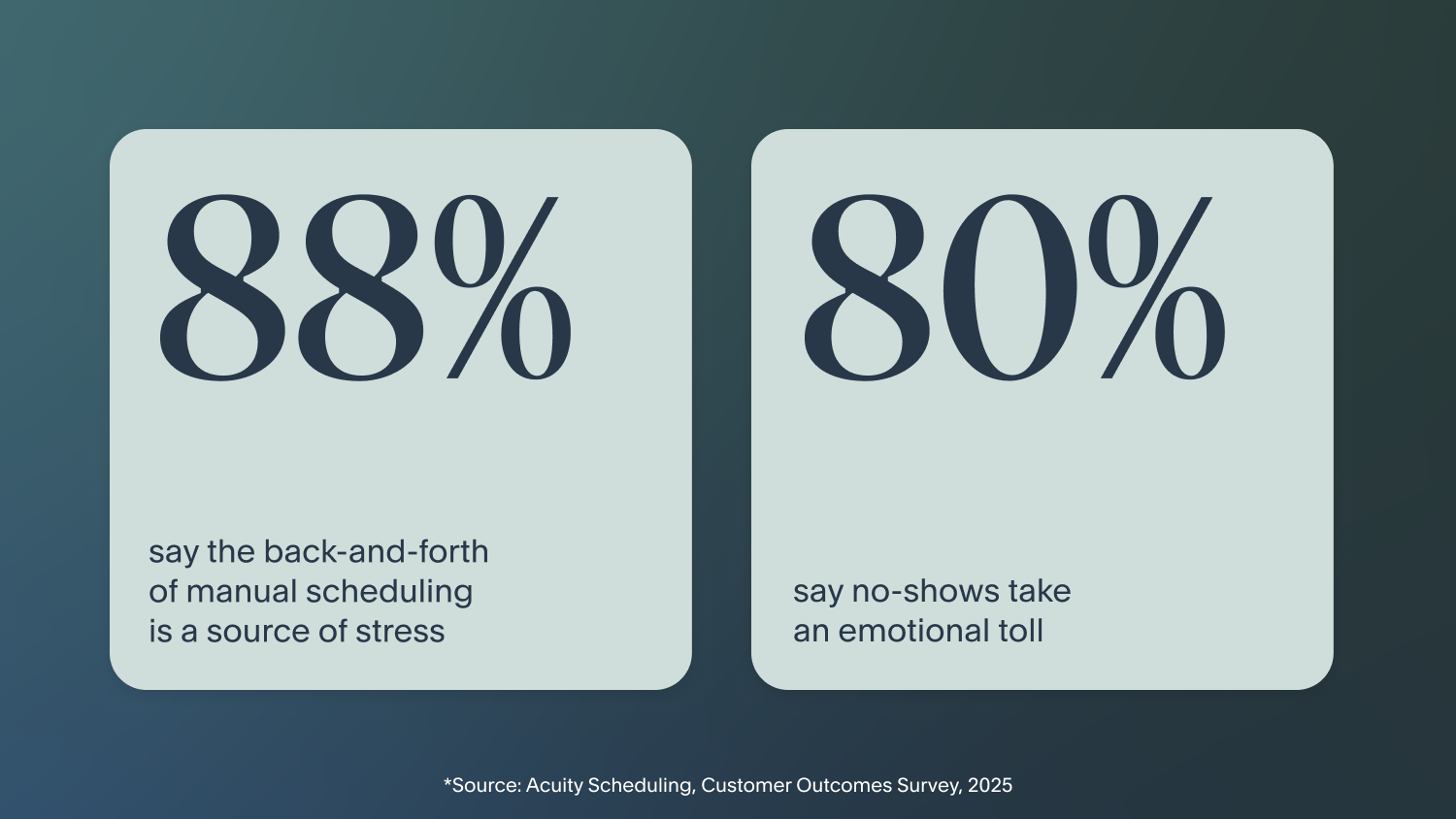
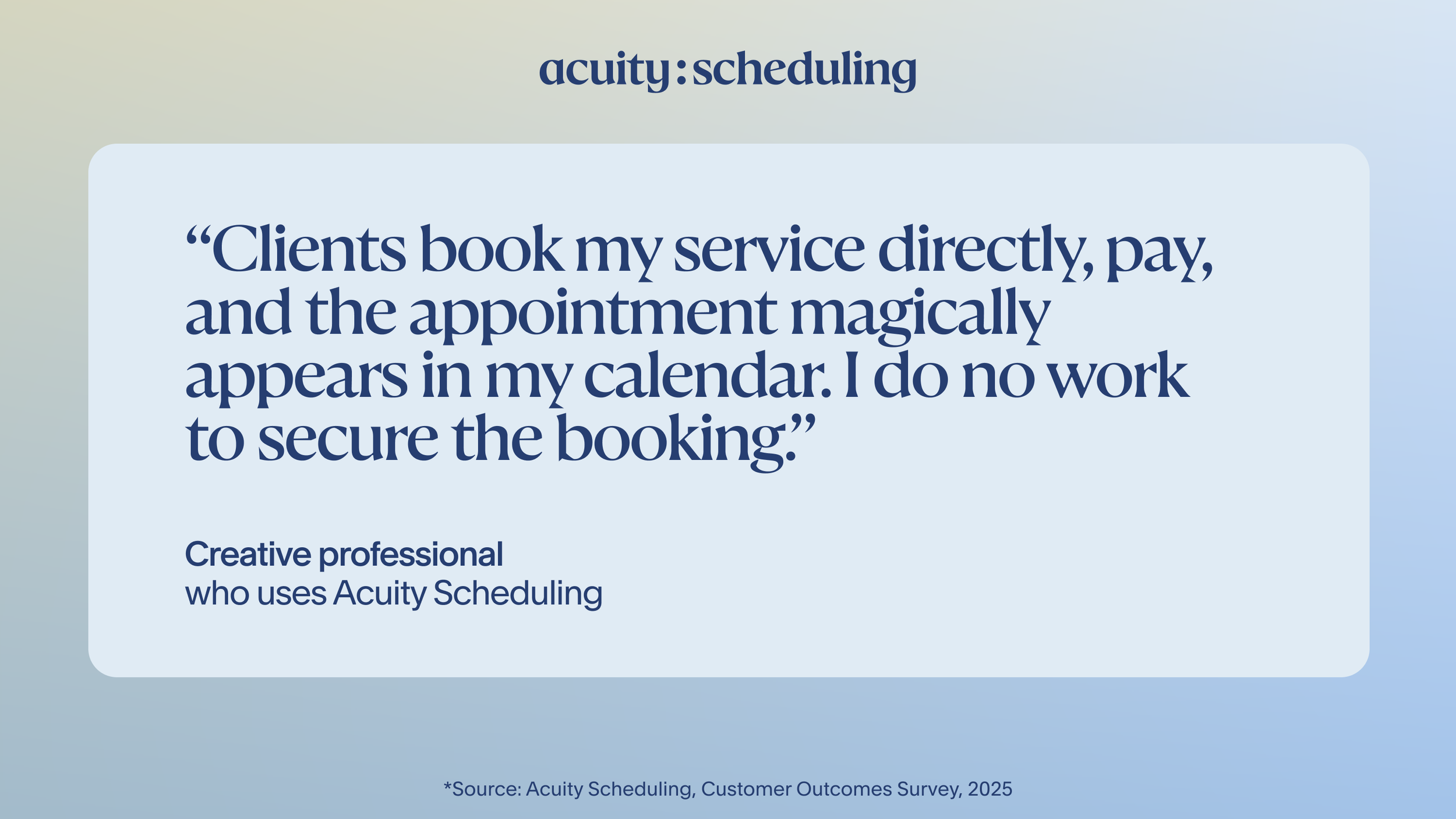
Relying on a manual scheduling system comes with an emotional cost. Among surveyed Acuity customers, 88% agree that the back-and-forth of manual scheduling is a source of stress, and 80% say no-shows take an emotional toll. Uncertainty, follow-ups, and missed appointments compound over time, even when the business itself is performing well.
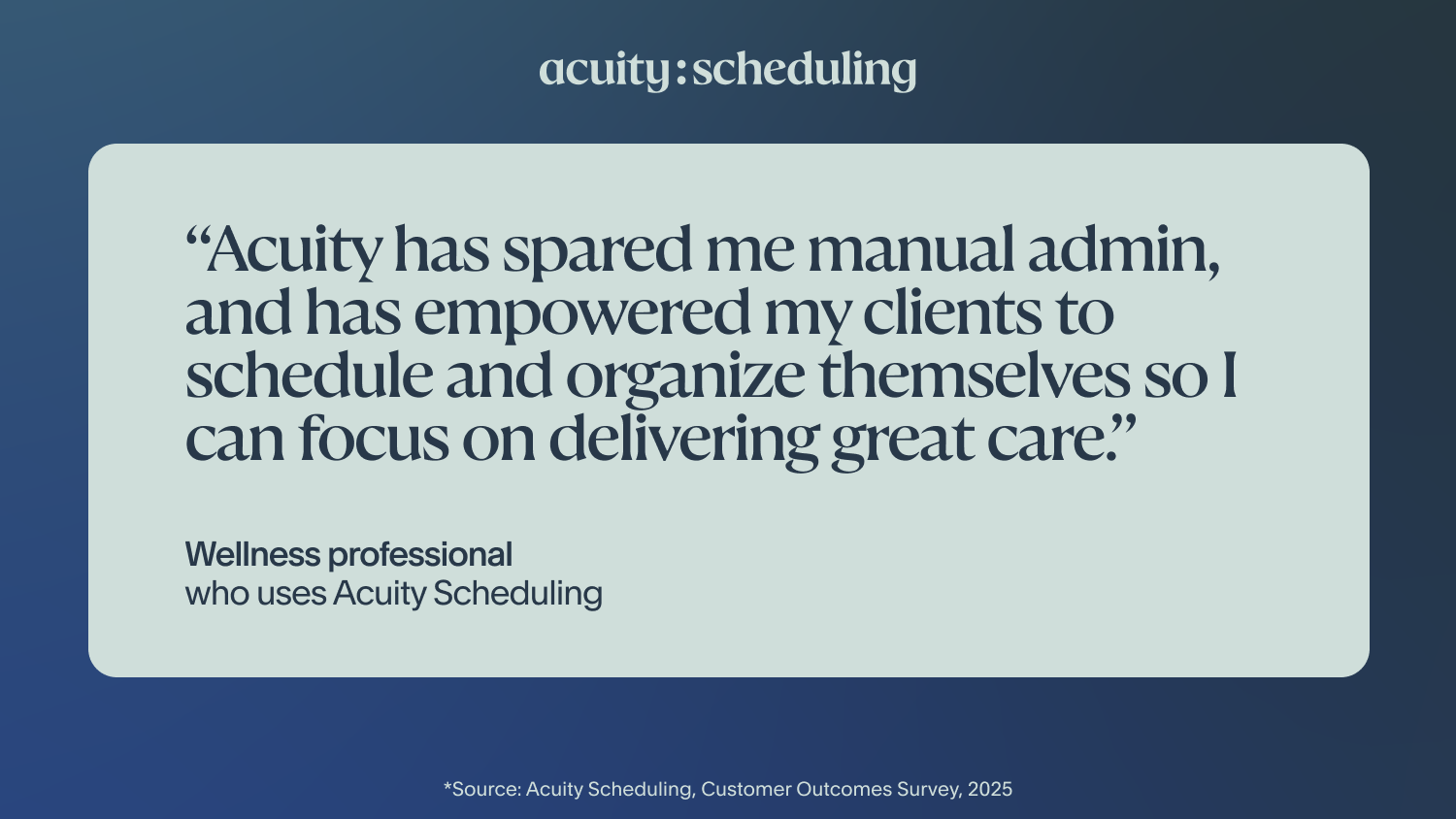
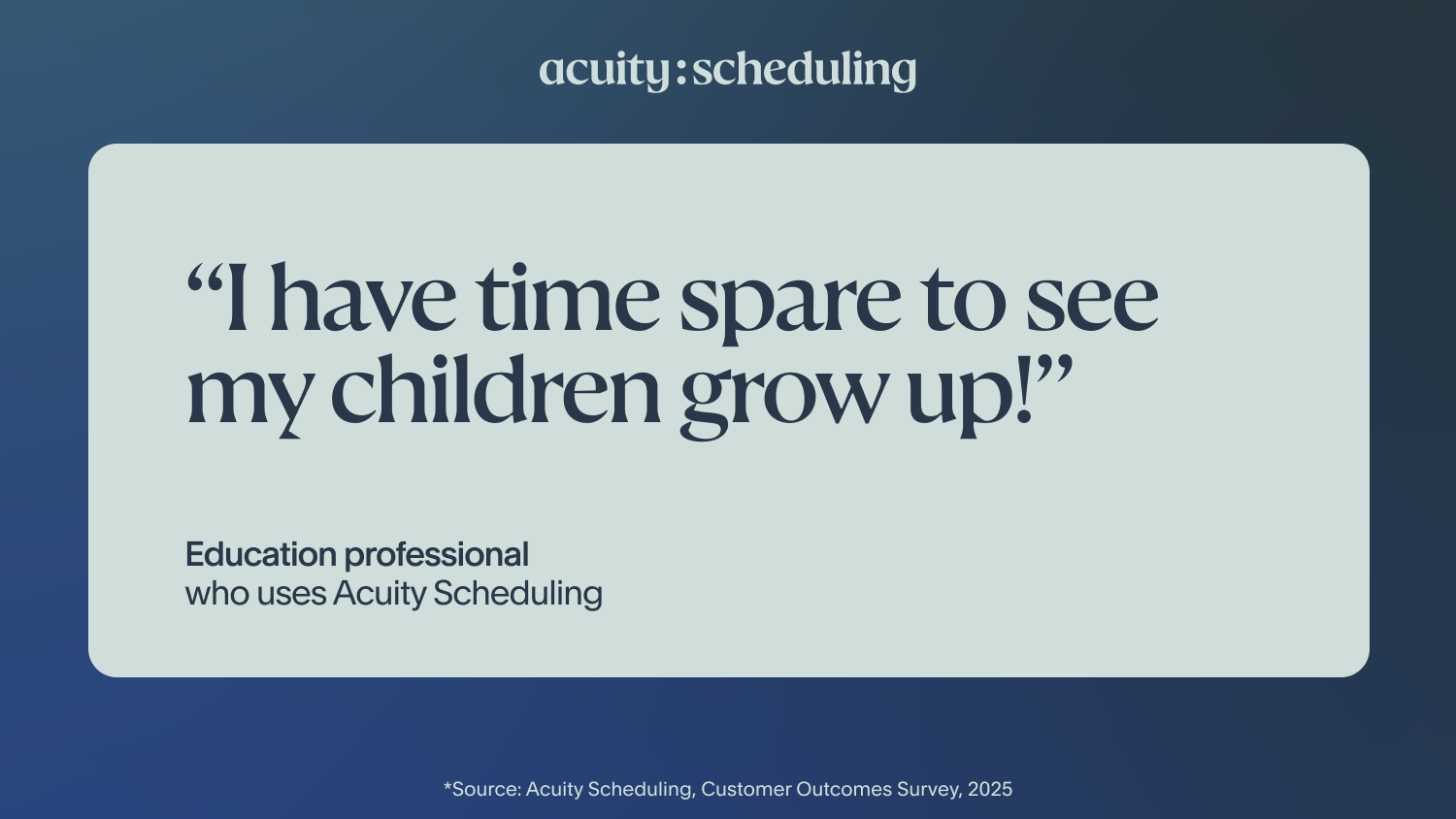
Automated scheduling reduces the cognitive and emotional burden of running a business. Over 60% of Acuity customers surveyed say they feel more in control of their business, 54% feel less stressed, and 45% feel more in control of their personal time.
When scheduling runs reliably, there’s less manual tracking to do. Fewer loose ends. Clearer boundaries. More room to focus on the work, and step away from it when the day is done.
That shift is as valuable as any financial return.
The online booking tools that make a difference
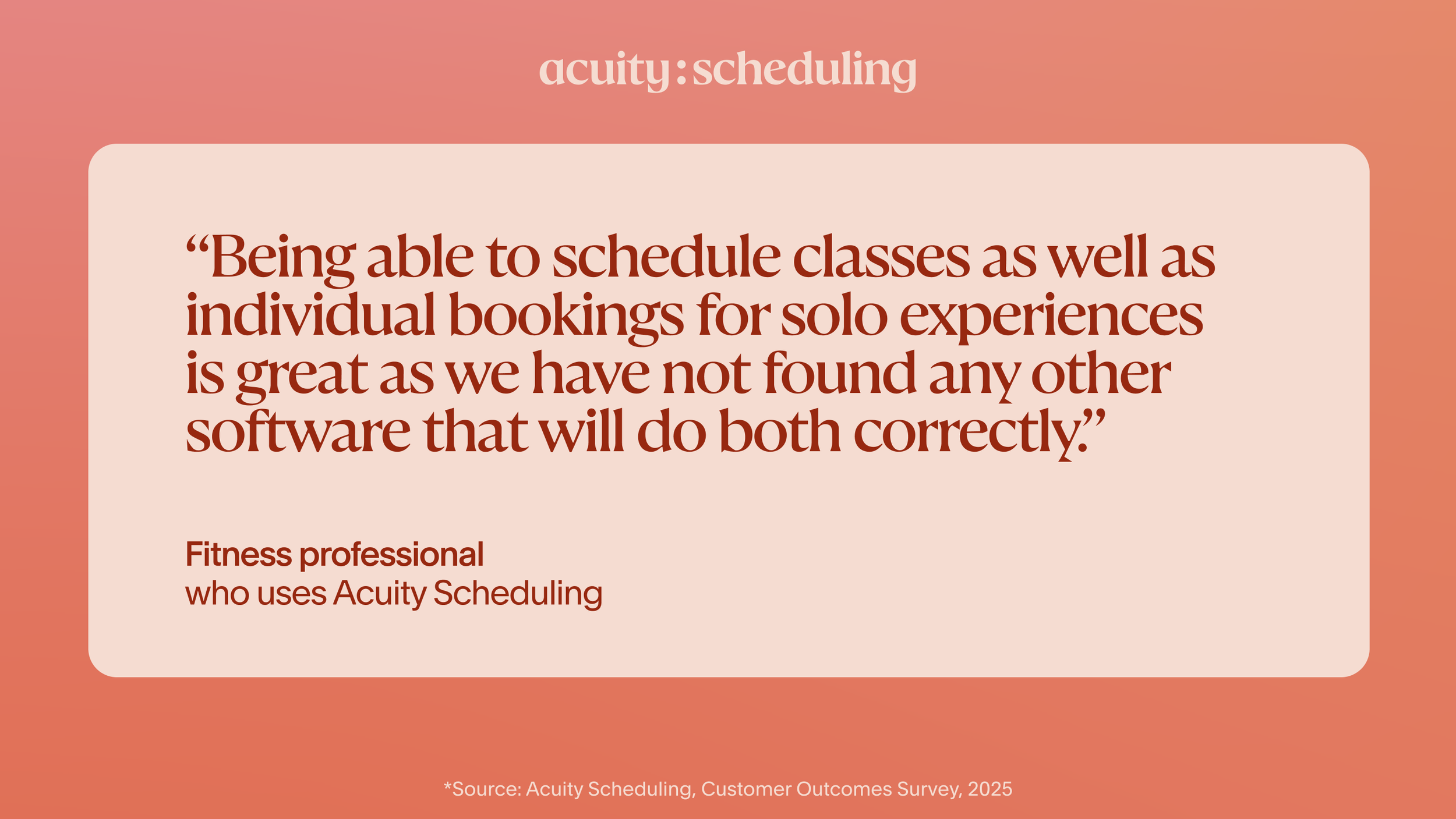
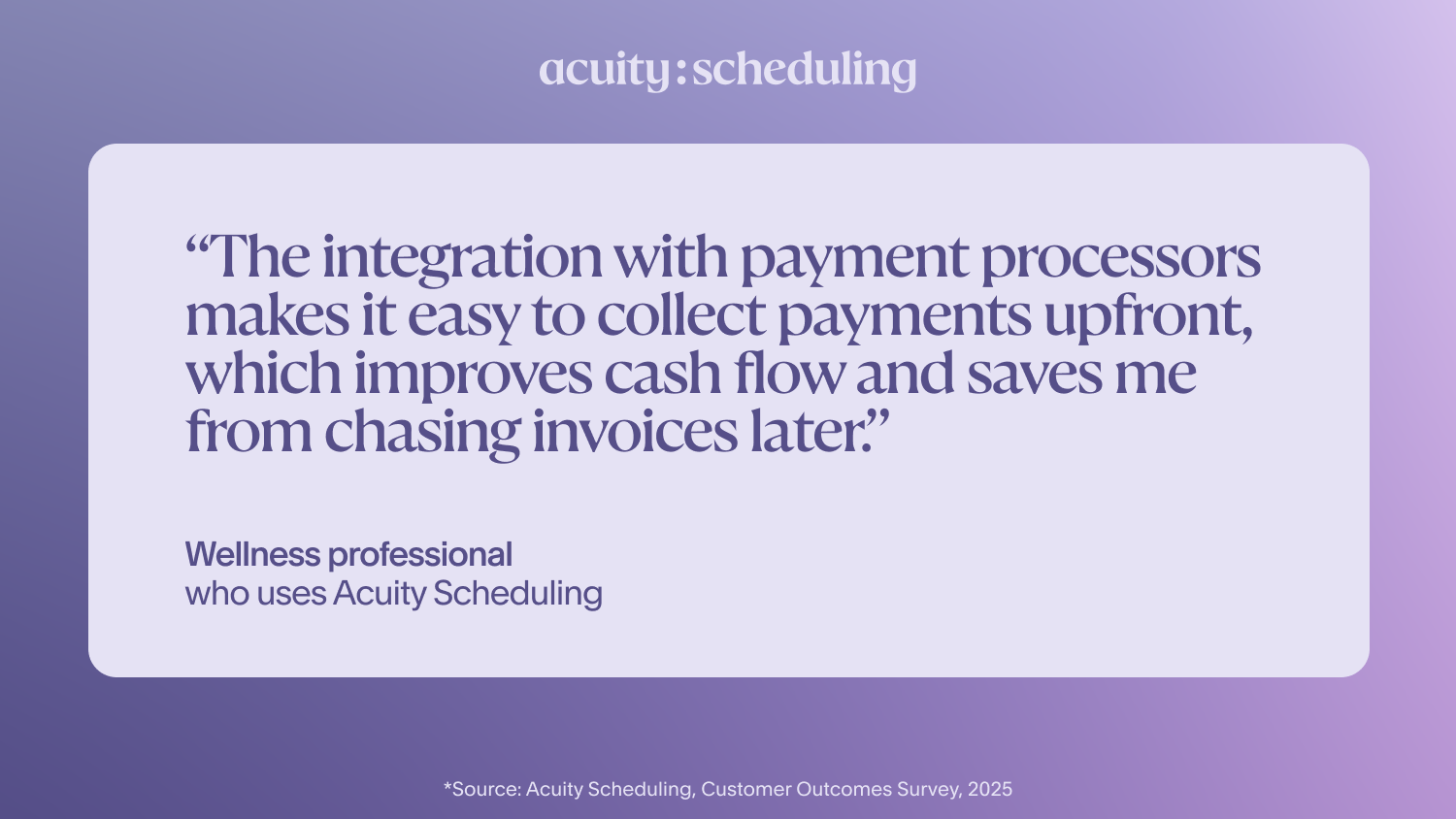
The outcomes Acuity customers report are supported by a set of tools that become embedded in daily operations.
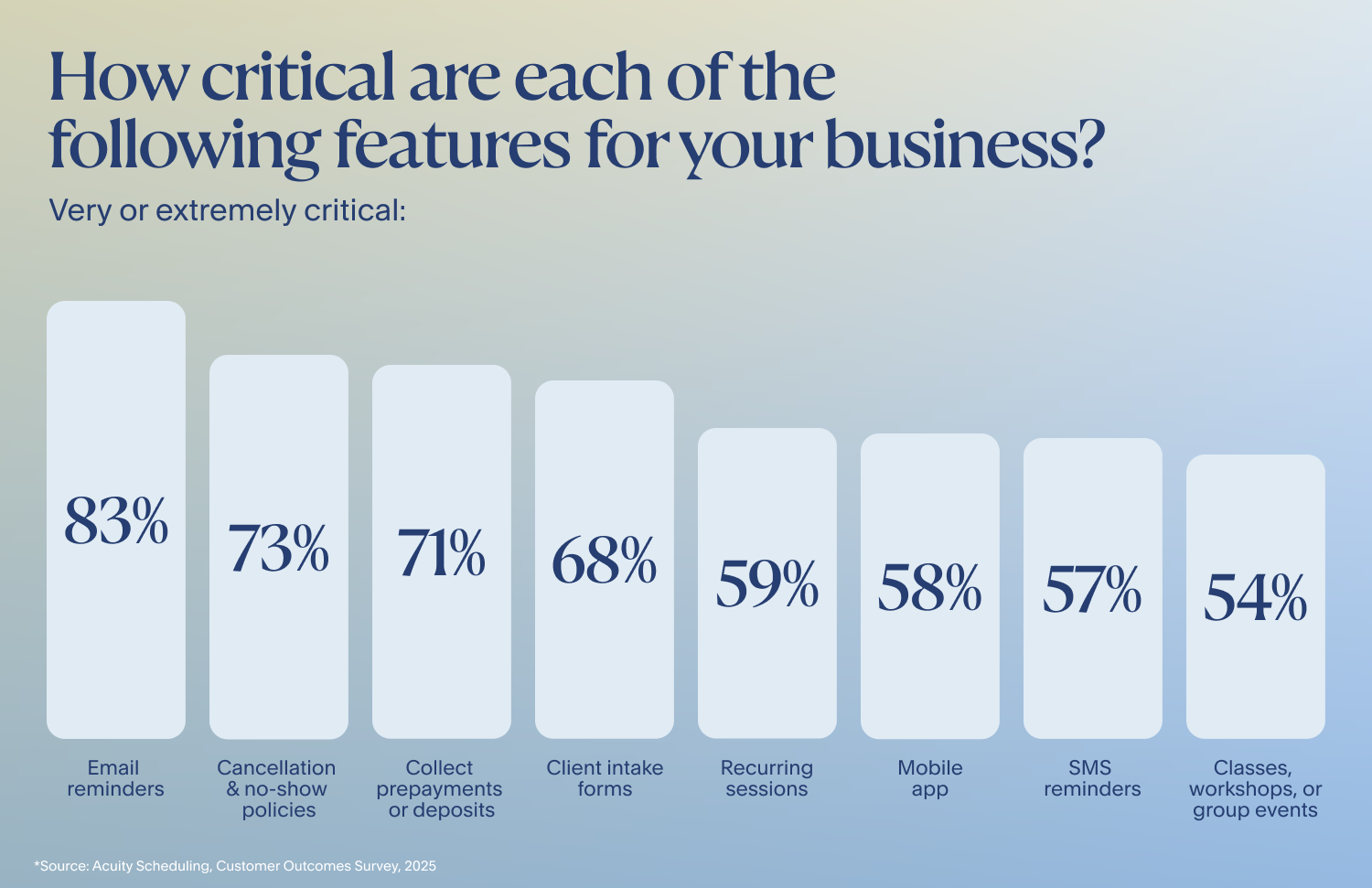
Email (83%) and SMS reminders (57%), cancellation and no-show policies (73%), prepayments and deposits (71%), client intake forms (68%), recurring sessions (59%), the mobile app (58%), and group scheduling (54%) were consistently rated as “very or extremely critical” to businesses.
Each tool addresses a specific pressure point across the booking lifecycle. Intake forms reduce manual intake and back-and-forth communication, for example, while automated reminders and cancellation policies support attendance and reliability.
Respondents also rely on revenue and loyalty tools like packages, subscriptions, add-ons, coupons, and gift certificates, which increase client retention and value per booking.
Rather than showing dependence on a single feature, responses highlight the compounding effect of using several in one system. When booking, communication, and payments work together, businesses experience more consistency, stronger follow-through, and fewer operational gaps, making growth easier to sustain.
Who benefits most from scheduling software
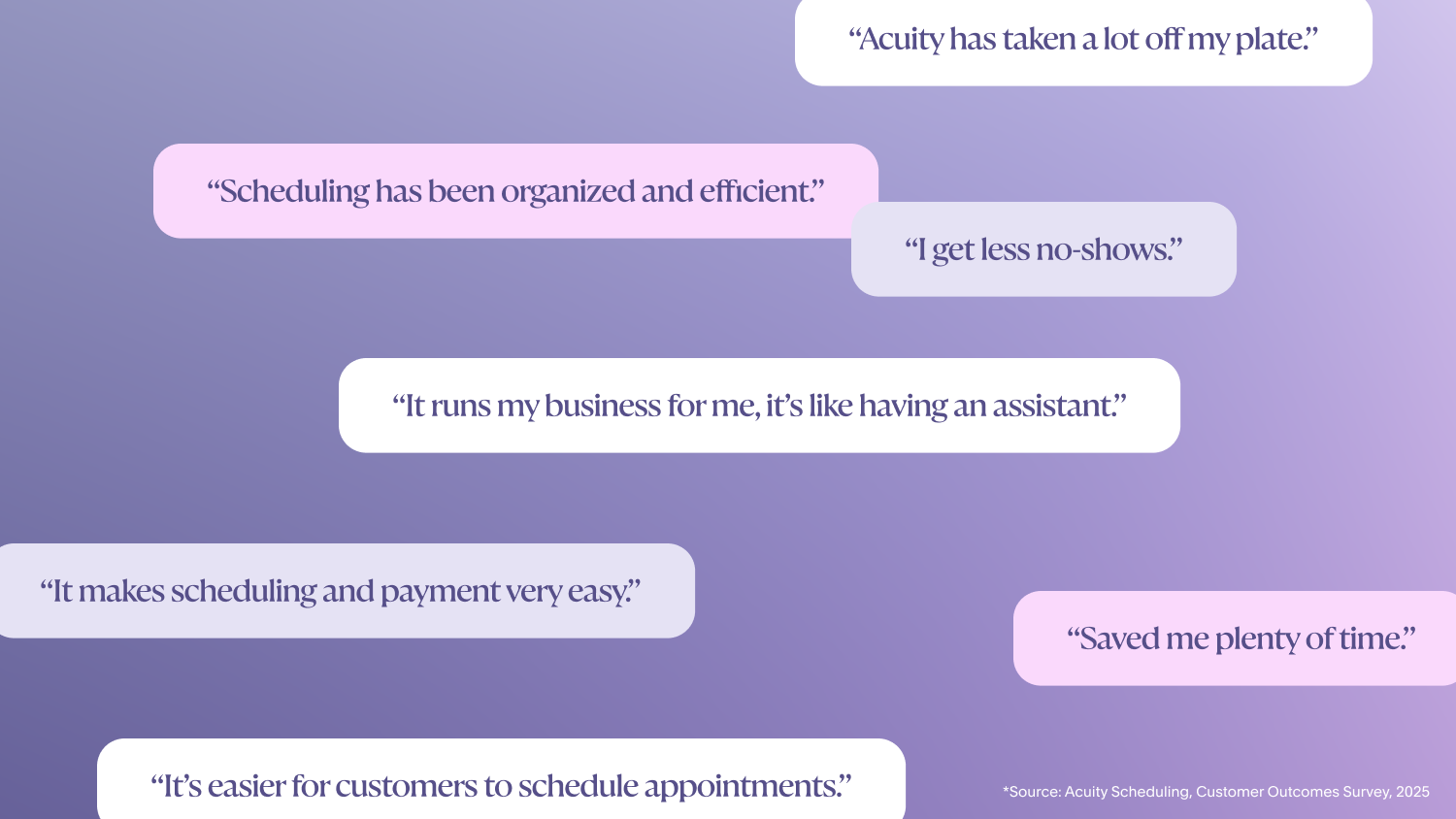
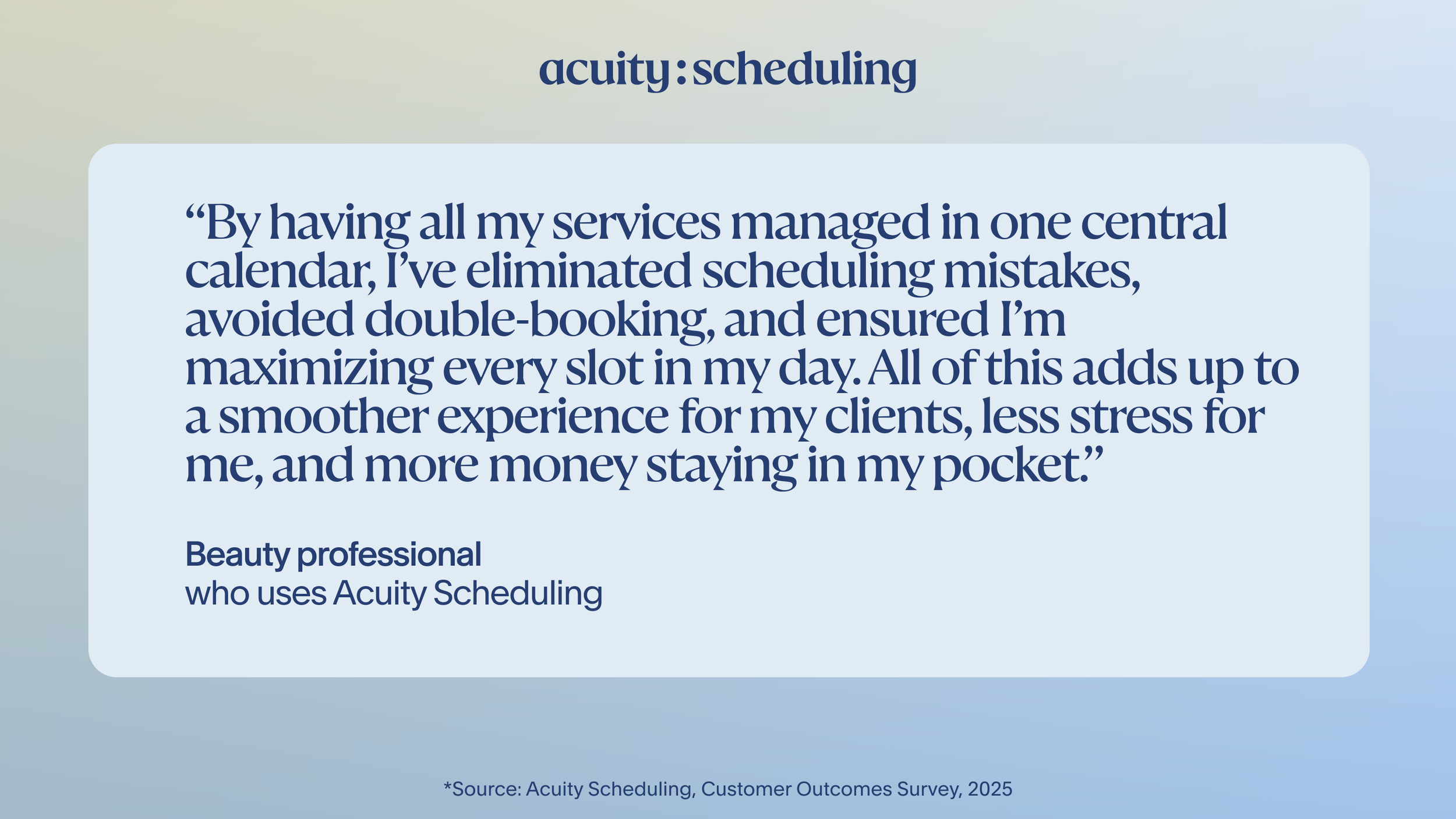
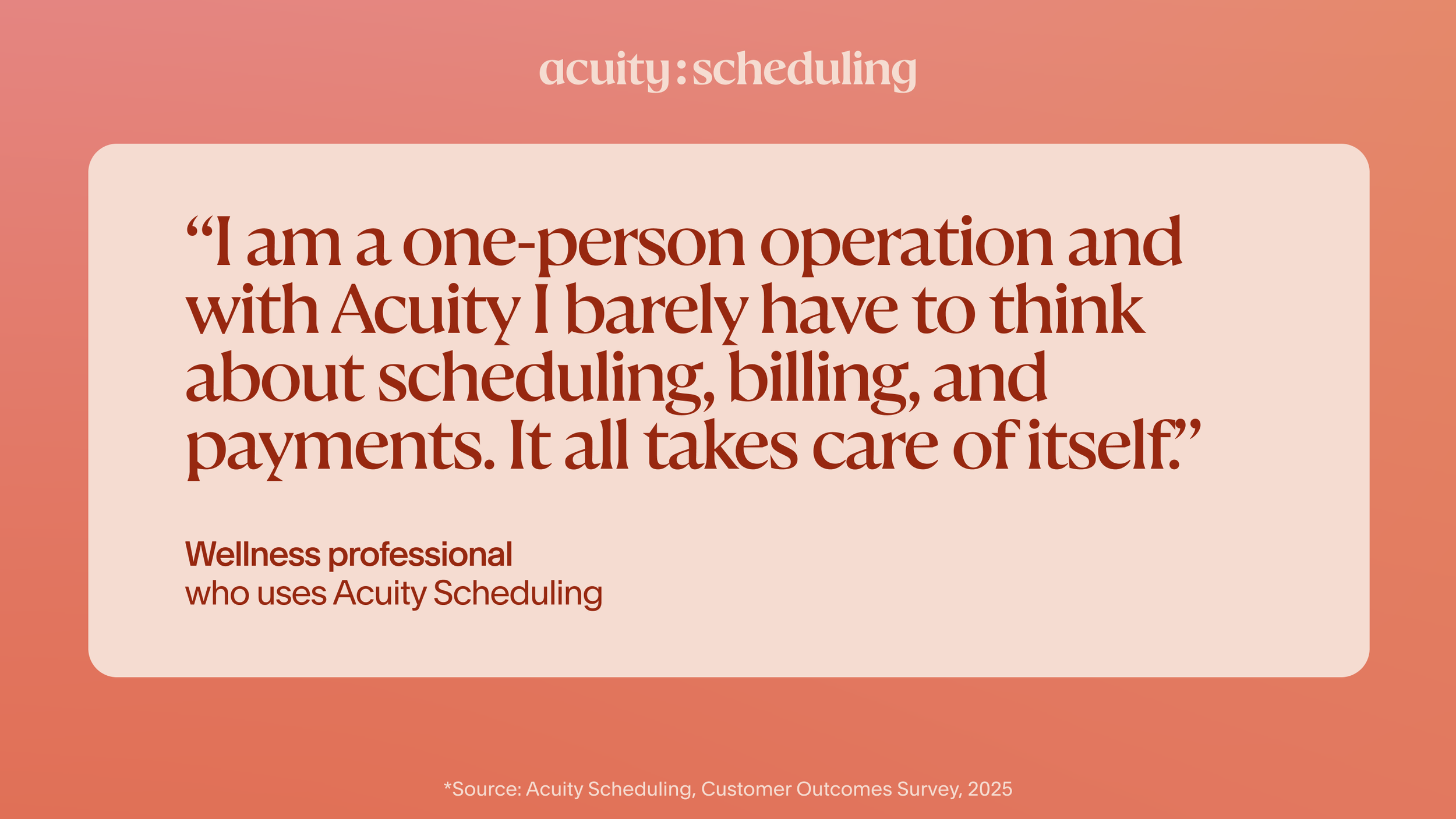
The outcomes highlighted in this report are strongest for businesses where time, trust, and consistency matter. These are businesses who book time with clients or groups, value self-service experiences, and want systems that scale.
Businesses who see the greatest impact are often:
Sole proprietors offering 1:1 services online or in person
Class and workshop organizers where multiple participants register to secure a spot at a pre-set time
Small teams balancing multiple calendars, locations, and limited resources or equipment (like a HydraFacial machine)
By providing a flexible, reliable scheduling system, Acuity helps these businesses get organized, show up prepared, and stay focused. The scheduling software’s flexibility means Acuity supports a variety of industries and scheduling needs.
When scheduling runs itself, everything else moves forward
Across industries and growth stages, the story is consistent. Automating scheduling workflows reduces administrative effort, supports revenue growth, improves booking reliability, strengthens brand perception, and helps business owners make the most of their time.
Scheduling may be only one part of running a business. But when it runs effortlessly, it supports everything else.
If you’re hoping to achieve similar results, join the community of over 280,000 businesses who power their appointments with Acuity Scheduling.
Start your free trial today and see how your days transform.
Preguntas frecuentes
-
You can save time by using online scheduling software that lets clients book, reschedule, and pay on their own. Automated confirmations, reminders, and calendar updates reduce emails and manual work. Businesses using scheduling automation report spending significantly less time on administrative tasks and more time focused on clients and growth.
-
Automated scheduling improves revenue by helping businesses book more consistently and reduce missed opportunities. When clients can book and pay online at any time, calendars stay fuller. Built-in tools like packages, subscriptions, and add-ons also increase average booking value and support more predictable income.
-
Online booking reduces no-shows by setting clear expectations and sending automated reminders on your behalf. Confirmation emails, reminder texts, deposits, and visible cancellation policies help clients stay accountable. Businesses using automated scheduling report fewer missed appointments and more reliable daily schedules.
-
A branded scheduling page creates a professional first impression and builds client trust. Custom branding makes booking feel seamless and credible, reinforcing your business identity. Businesses report that branded booking pages improve confidence and support stronger pricing and policy compliance.
-
Scheduling can streamline operations by centralizing bookings, payments, client information, and communication. Automated workflows reduce manual work and errors while keeping calendars organized. This allows service businesses to run more efficiently and manage growth without adding administrative complexity.
-
Small service businesses rely on tools like online booking, automated reminders, intake forms, payments, packages, subscriptions, add-ons, and group scheduling. These features reduce administrative work, improve the client experience, and support consistent, predictable operations and income.
-
Yes. Online scheduling reduces stress by eliminating constant back-and-forth and manual coordination. Automated booking systems handle appointments, reminders, and payments in the background, helping solo entrepreneurs feel more organized, protect their time, and maintain better work-life balance.
-
Packages, subscriptions, and add-ons boost revenue by encouraging repeat bookings and higher transaction values. These tools make it easier for clients to commit upfront, creating more predicable income while reducing the effort required to sell additional services.
-
A professional, client-friendly scheduling system is easy to use, mobile-friendly, and clearly communicates availability, pricing, and policies. Key features include branded booking pages, automated reminders, secure payments, intake forms, and clear confirmations that reduce friction for clients.
-
Automated booking helps you regain control of your time by letting systems manage scheduling logistics. Clients book within your availability, reminders run automatically, and payments happen upfront. This reduces interruptions, protects your schedule, and creates more predictable, manageable days.