Cómo Loop of the Loom llegó a tener dos estudios con Acuity Scheduling
Key takeaways
Loop of the Loom replaced a manual notebook booking system with Acuity Scheduling in 2019, eliminating double bookings and reducing administrative strain.
The studio opened a second location, something the founder says would’ve been impossible to manage manually.
Acuity's separate calendar and categorization features help the studio manage two locations, multiple class types, and a mix of new and returning students simultaneously.
Automated reminders and confirmations prepare students ahead of class and help enforce the studio's cancellation policy without staff intervention.
The studio uses Acuity's package and add-on features to handle recurring project-based students alongside single sessions.
A studio built on slow, intentional work
"We live in a world of screens and speed," says Yukako Satone, founder of Loop of the Loom. "Everything is optimized. But something in us wants the opposite: something slow, tactile, imperfect, and made by hand."
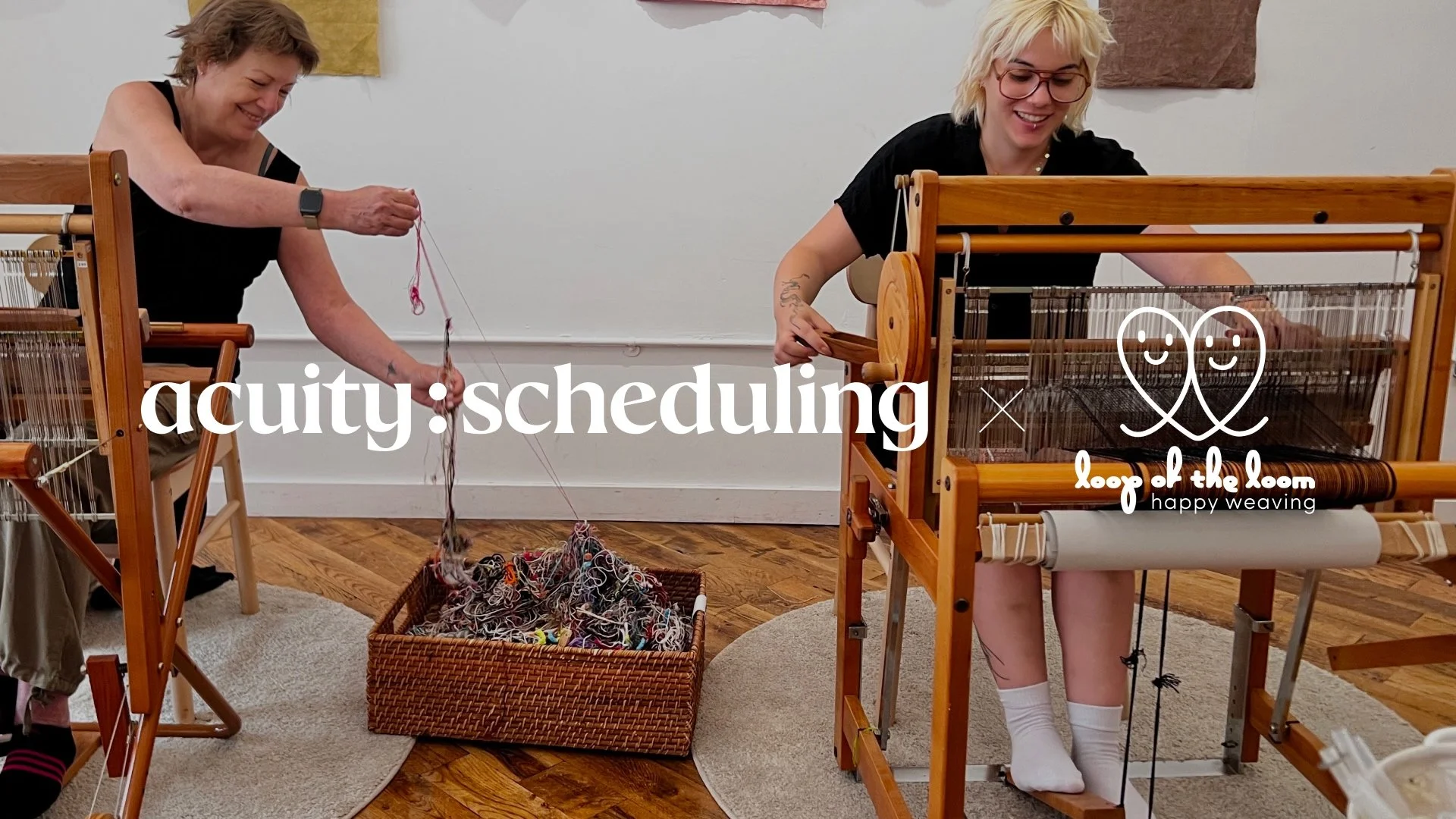
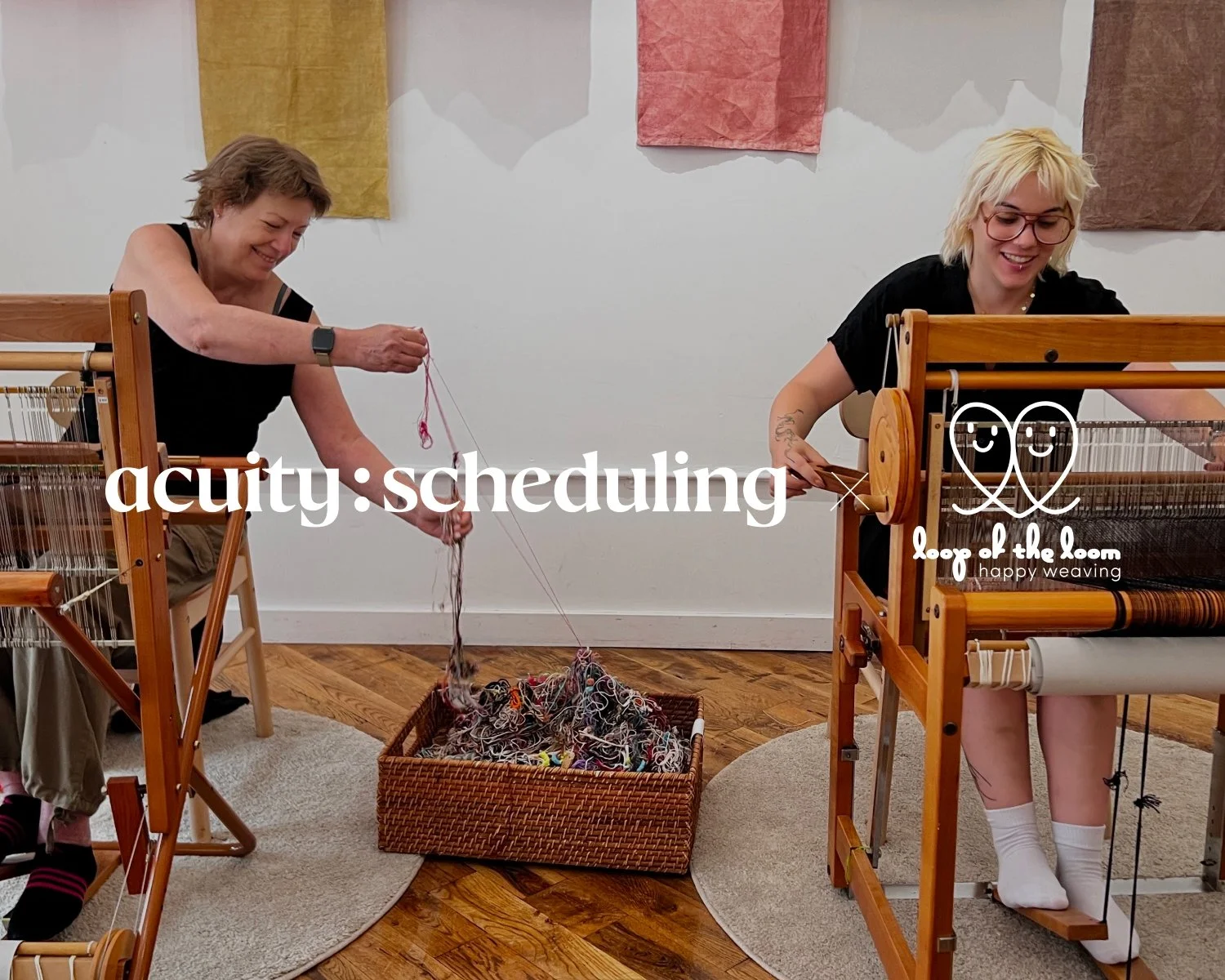
That philosophy is the foundation of what she built when she opened her studio 20 years ago. What began as a single loom brought back from Japan after a transformative one-hour class has grown into two New York City studios and a community that spans all ages, abilities, and backgrounds.
Loop of the Loom offers a variety of freestyle weaving classes ranging from two-hour intro sessions for beginners to all-day immersions, project-based classes, and advanced packages. Classes accommodate up to 12 students at a time, with separate instructors assigned to each location.
“My favorite class is the all-day session,” Yukako shares. “The all-day session is longer than the two-hour intro class, so people can stay much longer. They can stay up to seven hours. We can see their transition, their mood changing, and the spark in the middle of the class.”
It’s a business built on deep, personal relationships with students. And for years, the administrative side of running it was anything but calm.
What booking looked like before scheduling software
Before 2019, Yukako managed everything by hand. There was no automated confirmation, no payment collected ahead of time, and no system to prevent two students from booking the same seat at the same loom.
“Before, with manual booking, it was very tedious and repetitive. Acuity took all of the stress and mental load off.”
The manual process created friction for students, too. People in different time zones would contact the studio at odd hours to reserve a class. Students arrived without a clear sense of what to expect. And for the team, every class meant phone calls and follow-ups that pulled attention away from teaching.
"It would mean so many more phone calls that would distract us from class," Yukako says when asked what going back would look like. "It would also mean more friction and confusion, so people would not really know exactly what to expect when they come here."
Unpaid bookings were another recurring challenge. Without payment collected at the time of booking, the studio had no reliable way to hold a seat or protect their revenue.
Why Loop of the Loom chose Acuity Scheduling
Loop of the Loom was at an inflection point, expanding from one Manhattan location to a second studio in Brooklyn. That kind of growth, with multiple locations, multiple class formats, separate staff schedules, and a mix of new and returning students, would have been nearly impossible to coordinate manually.
Acuity Scheduling offered a structure that could hold all of it.
“We used to use a manual notebook. I was looking for a booking system, and Acuity popped up. I did not try anything else, but at the same time, I opened a second studio, and it really fit our business. It became part of our business growth. Acuity helped our business a lot.”
How Loop of the Loom uses Acuity Scheduling today
With complex programming, Loop of the Loom uses Acuity to keep things manageable for both staff members and students.
How does Loop of the Loom manage two studio locations?
The studio uses separate calendars for each location. "We have two studio locations, in Dumbo and the Upper East Side, and we use different calendars for each location," Yukako says. “Student classes fill up automatically. We also use the calendar feature to manage our staff’s availability, so we know exactly which instructor will be at which location for each class.”
How does the studio handle different class types and experience levels?
Loop of the Loom offers single-session drop-in classes for beginners alongside multi-session project packages for returning students. These are handled differently within Acuity. "We have single sessions that are booked as appointments, and then we have recurring sessions where people return to work on their projects. Those are handled as packages," Yukako explains.
For private workshops and special events, the team uses time-blocking to help manage overall capacity. "We use the ability to block off time slots so we know exactly how many people will be coming in for each event each day," she says.
How does pricing work across different student types?
The studio serves students of all ages, and Acuity's pricing tools accommodate that. "For each class, we have different pricing levels set for children and adults, so that helps streamline the process," Yukako says. “We also utilize the add-on feature to make custom additions for each person’s needs.”
How do automated reminders support the student experience?
Confirmations and reminders serve a dual purpose at Loop of the Loom. "The ability to have reminders and confirmations for students creates anticipation for them to get prepared for class," Yukako explains. "It also helps them agree to our cancellation policy."
Automated communications ensure everyone shows up informed and on time, without requiring staff to chase confirmations manually. Students arrive at the loom, ready to weave.
How does the client list support the studio's relationship-driven approach?
Loop of the Loom knows their students, with many of them coming back for years. The client list in Acuity helps the team honor those relationships.
"One of the strongest features is the ability to have the client list because we have a deep, personal relationship with each of our students," Yukako says. "Being able to keep track of how many times they have been here, and whether it is their first time, helps. We also have a lot of families with children, so it helps us keep track of their dynamics."
A second studio and a fuller calendar
The operational shift has been significant. Students can easily self-book online. Double bookings are a thing of the past. Payments are handled before anyone walks through the door.
"We no longer have to worry about unpaid bookings," Yukako says. "It is all handled ahead of time."
When classes fill up, instructors can be fully present. "Our maximum capacity for a class is 12, which sometimes can be a lot for one or two instructors to take care of everyone," she explains. "Not having to worry about logistics, admin work, phone calls, or frictional conversations really helps the class."
Students have noticed, too. "Most of our students find the process super easy and not complicated," Yukako says. "They are well prepared when they walk in."
But the biggest result is the one that says the most about what a better booking system makes possible:
“Since we streamlined our booking process in 2019, we opened an additional studio. It would have been impossible to handle two studios and two staffs with manual booking. We were able to grow our community to an entirely new neighborhood.”
More students fill the studios now, and Yukako connects that directly to friction-free booking. "If the booking process is simple and easy, more people do not have to hesitate. They commit to it."
What other creative studio owners can learn from this
Loop of the Loom is the kind of business Acuity Scheduling is built for: a high-touch, relationship-driven service business where the work is personal, the schedule is complex, and the founder's time is better spent with students than on the phone.
Their experience offers practical guidance for other creative studio owners weighing a similar switch. Yukako's advice: "Definitely take the step. It might seem like a lot to do at once, but it streamlines the process so much in the future. Assess your studio's needs and your clients' needs to create the foundational structure."
However you operate today—with one location or more, single sessions or recurring, a handful of clients or a fully booked calendar, virtually or in person—Acuity Scheduling can give you the space to share your craft, while your schedule takes care of itself.
"It creates a lot more space for us to focus on the student and encourage their creativity," Yukako says, "rather than having to worry about administrative work or logistical things."
Ready to see what Acuity Scheduling can do for your business?
Try the scheduling software Loop of the Loom trusts free for seven days, no credit card required, and weave a better booking experience of your own.









Preguntas frecuentes
Can Acuity Scheduling support multiple studio locations?
Yes. Acuity Scheduling has plans that support multiple calendars, which you can set up for each location. This keeps bookings, availability, and staff schedules organized across locations without overlap or confusion. Loop of the Loom manages their Upper East Side and DUMBO studios using separate calendars within the same Acuity account.
How does Acuity handle both single-session and recurring class bookings?
Acuity supports single-session and multi-session services within the same account. You can offer one-time appointments, repeating appointments, packages of multiple appointments, subscriptions, and more. This way studios can serve drop-in students and returning clients simultaneously, without mixing up booking flows.
Can I collect payment at the time of booking through Acuity?
Yes. Acuity Scheduling integrates with the leading payment processors and offers both online and in-person payment options. Collect a deposit or prepayment when a client books to secure the reservation, reduce no-shows, and stop chasing payments after the appointment. For studios with capped class sizes, prepaid booking helps ensure every seat on the calendar is a confirmed, paid commitment. Learn more about accepting payments in Acuity.
How do automated reminders work in Acuity Scheduling?
You can configure automated confirmation emails and reminder messages that go out to clients before their appointment or class. These messages can include details about the appointment time, what to expect, and studio policies. For Loop of the Loom, automated reminders prepare students ahead of class and help reinforce the studio's cancellation policy without staff needing to follow up individually.
How does Acuity help studios manage class capacity?
Each class you offer in Acuity can have a maximum capacity set. Once that number is reached, the class is no longer bookable. Read more about setting up group classes.
Is Acuity Scheduling a good fit for creative and arts-based businesses?
Yes. Acuity Scheduling works well for any service business that books clients, including weaving, welding, and ceramics studios, art classes, music schools, photographers, and similar creative businesses. Features like packages, intake forms, and automated reminders are particularly useful for studios that offer different programming and cultivate long-term client relationships.